How to Get a DPL License in Pakistan
Step-by-Step Guide
A DPL (Dangerous Petroleum License) lets you legally store petroleum products and flammable chemicals. This guide shows you how to choose the right form, prepare the file, build your storage and pass the Department of Explosives inspection.
DPL Basics
Do You Need a DPL License?
Under the Petroleum Act 1934, as amended in 2023, any petroleum product or petrochemical with a flash point below 93°C counts as petroleum. Importing, storing, transporting or selling it needs a licence under the Petroleum Rules 1937. The Act now has three classes:
Class A: flash point below 24°C, for example petrol, acetone and toluene
Class B: 24°C to 55°C, for example xylene and kerosene
Class C: 55°C to 93°C, for example furnace oil
Products with a flash point of 93°C or more are outside the Act. The flash point on the product MSDS decides the class.
Which DPL Form Do You Need?
Choose the Right Licence
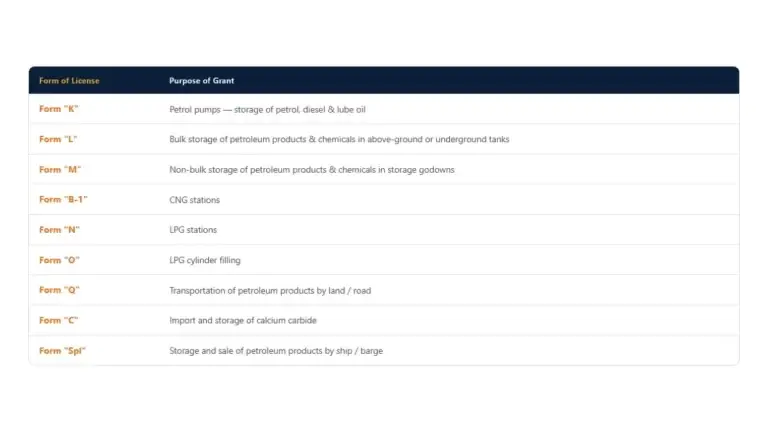
Form M: godowns storing in drums, cans and packages
Form L: bulk storage in tanks at depots and factories
Form K: petrol pumps, filed through the oil marketing company
Form O and P: LPG plants and industrial LPG storage
Form Q: road tankers carrying petroleum in bulk
Form B-1: CNG stations
Form C: import and storage of calcium carbide
Form M
Form L
Form K
Documents Required
DPL Application File
Application on Form D, filled in and signed
Land ownership documents or a registered tenancy agreement
Owner CNIC, NTN and SECP company registration
Original Deputy Commissioner NOC with attested site plan
Proposed storage plan drawn to the Petroleum Rules 1937
MSDS for every chemical, with its purity
Treasury challan of the licence fee
Form D
DC NOC
MSDS
DPL License Process, Step by Step
Step 1: Check flash points and quantities to choose the right form
Step 2: Confirm your plot, or rent a DPL-ready godown
Step 3: Obtain the Deputy Commissioner NOC with attested site plan
Step 4: Submit Form D, documents and challan to the Department of Explosives
Step 5: Receive the approval letter and approved plan
Step 6: Build the storage exactly to the approved plan within six months
Step 7: Submit the engineer safety and completion certificate
Step 8: Pass the Explosives inspection and receive your licence
DPL License Fees and Timeline
The Department of Explosives charges a fixed Rs. 25,000 for a Form M licence (SRO 42(KE)/2020). A Form L depot licence costs Rs. 30,000 per product up to 500,000 litres and Rs. 80,000 per product above that. NOCs, drawings and construction are separate costs. Fees are revised from time to time, so confirm the current amount before you pay.
Yes, above the exempt quantities. Diesel has a flash point well below 93°C, so it falls under the Petroleum Act. Storage in drums usually needs Form M and storage in tanks needs Form L.
Can I get a DPL license on a rented godown?
Yes. The Department of Explosives accepts rented premises when the tenancy agreement is registered. Our DPL-ready rental godowns come with that registered agreement.
How long is a DPL license valid?
A DPL licence is normally renewed every year before it expires. Storing after expiry can lead to sealing of the premises, so start the renewal well in advance.